How to Understand a Decreased Anion Gap with an Anion Gap Calculator
How the Anion Gap Indicates
The anion gap is a derived value that helps clinicians assess electrolytes and assess overall acid-base balance. It is derived from common blood test results, especially serum sodium, serum chloride, and serum bicarbonate. Although it is not a direct measurement, it can provide an important diagnostic clue about a patient’s metabolic status and whether an acid-base disorder may be present.
Most often, the anion gap is obtained as part of an electrolyte panel or broader routine lab panel. Because it reflects the relationship between measured cations and anions in the blood, it is useful for interpreting results when something looks off in the serum chemistry. Clinicians use it to help identify causes of metabolic acidosis, but it can also be informative when the result is unexpectedly low.
The value is influenced by normal protein levels in the blood, especially albumin, as well as by substances that are not routinely measured. That is why the anion gap is best understood as part of a broader clinical picture rather than as a standalone number. A single abnormal lab value may or may not be meaningful, depending on the rest of the blood test results and the patient’s symptoms.
In what way does an Anion Gap Calculator Function
An Anion Gap Calculator is a simple tool that employs the anion gap formula to the values from a serum chemistry or serum chemistry panel. In the usual method, the calculation uses serum sodium, serum chloride, and serum bicarbonate. The result shows the difference between measured positive and negative ions in the blood.
The core calculation formula is usually written as:
Anion gap = sodium − (chloride + bicarbonate)
Certain labs may use slightly different methods or include potassium in the formula, but the sodium-based version is the most widely used. This means the number can vary a bit depending on the lab and reporting method, which is one reason laboratory variability is important when interpreting results.
An Anion Gap Calculator is valuable because it quickly converts routine values from a routine lab panel into a clinically useful number. It can also support acid-base interpretation by showing whether the gap falls within a typical numerical range or appears unexpectedly low or high. Even so, the calculator does not diagnose a condition on its own. It is a tool for organizing information and identifying when further review may be needed.
What Qualifies as a Low Anion Gap
A low anion gap is typically a value that falls beneath the lab’s stated reference range. The exact cutoff differs between laboratories because methods, instruments, and reporting practices vary. This is why the same result may be within range in one setting and marked in another. A low result should always be interpreted using the reference interval provided with the test report.
One of the most common reasons a result seems low is lab variation. Small differences in measurement can change the calculated number enough to move it outside the reference interval. In some cases, the result is not truly abnormal but reflects the limitations of the testing process or the way the sample was handled. That possibility makes follow-up review important before assuming there is a major electrolyte abnormality.
Albumin also plays a major role. Because albumin carries a negative charge, lower albumin can reduce the measured anion gap even if other values are unchanged. This means a person with hypoalbuminemia may have a low anion gap without having a new or dangerous acid-base problem. Understanding the clinical significance of the result depends on the clinical context, not the number alone.
Typical Causes of a Reduced Anion Gap
Several issues can cause a low anion gap, and the most important first step is to check for likely, straightforward causes. Hypoalbuminemia is often at the top of the list because low serum albumin lowers unmeasured negative charge in the blood. This can reduce the calculated gap even when the rest of the electrolyte balance seems normal.
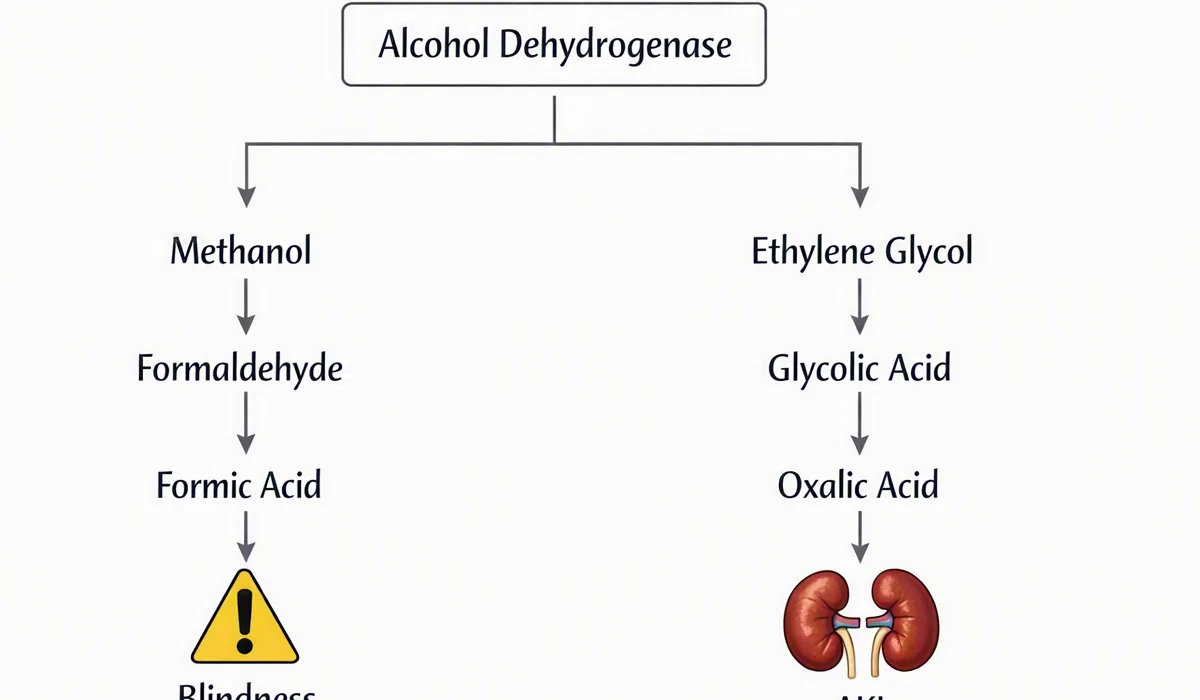
Another key cause is paraproteinemia, which describes abnormal proteins in the blood. This pattern can occur in conditions such as multiple myeloma, where excess positively charged proteins may shrink the gap. In these situations, the anion gap can become a useful diagnostic clue that points toward a deeper issue needing medical evaluation.
Unmeasured cations can also reduce the result. These are positively charged substances not routinely captured on a standard panel. Certain medications, supplements, or uncommon metabolic situations may affect the calculation. When this happens, the low value may represent a true biochemical shift rather than a problem with the calculator itself.
Finally, a laboratory artifact can create a misleading result. Sample contamination, processing issues, or instrument-related problems can all affect the measured serum sodium, serum chloride, or serum bicarbonate. Because the anion gap is derived from these numbers, even a small error in one component can change the final value.
How to Adjust the Anion Gap for Albumin
Because albumin has such a strong influence on the calculation, many clinicians apply albumin correction to estimate a more precise corrected anion gap. This is especially helpful when serum albumin is low and the uncorrected result may miss the patient’s actual acid-base state. Correction improves electrolyte interpretation by taking into account one of the most important non-charged variables affecting the gap.
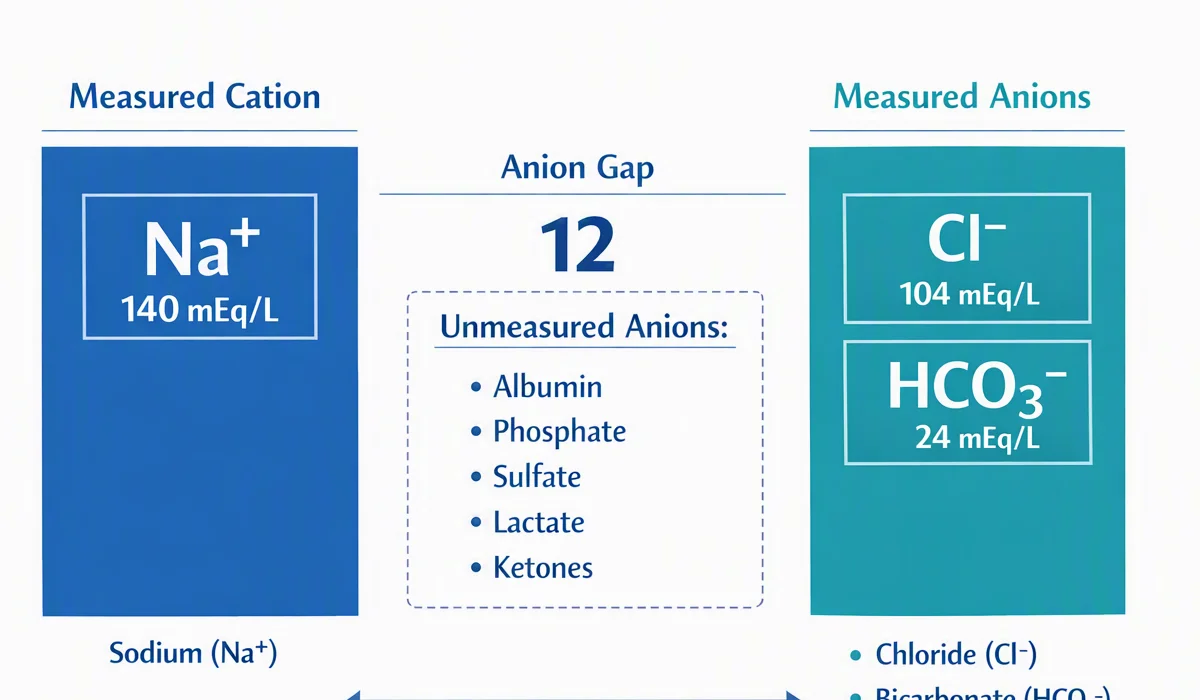
The aim of albumin correction is to differentiate a true acid-base problem from an apparent change caused by low protein. If albumin is reduced, the measured low anion gap may look more concerning than it really is. Adjusting the value can reveal whether the number is actually more in line with a typical range after protein status is considered.
In practice, the corrected result is most useful when the clinician is reviewing a questionable or unexpected pattern in a serum chemistry or electrolyte panel. The corrected anion gap helps read the overall picture of acid-base interpretation, especially when the patient has low albumin from illness, inflammation, malnutrition, liver disease, or other causes. It is one more way to make sure a low number is not mistaken for a more serious acid-base disorder.
Reduced Anion Gap versus Normal and Raised Anion Gap
To understand a low anion gap, it helps to look at it alongside a typical anion gap and a high anion gap. A typical result usually implies that measured electrolytes are in the normal relationship, though it does not rule out all disease. A raised anion gap, on the other hand, often points to metabolic acidosis caused by unmeasured acids in the blood.
The main clinical value of the anion gap is often in evaluating metabolic acidosis, but the number can also give insight when it is unusually low. A low value does not typically indicate acid buildup; instead, it often suggests changes in proteins, lab measurement, or unusual ions. This is why the result should be considered part of broader acid-base balance rather than as a standalone diagnosis.
Put simply, a elevated anion gap often signals excess acid, while a expected anion gap may be seen in several different physiologic states, including some types of acidosis. A reduced anion gap usually requires a different line of thinking, focusing on serum albumin, paraproteinemia, unmeasured cations, or possible testing issues. That contrast makes the result a useful part of broader acid-base interpretation.
When a Decreased Anion Gap Needs Doctor Follow-Up
Not all reduced result requires emergency attention, but a persistent low anion gap may merit clinical evaluation. The starting step is often repeat lab testing to make sure the result is repeatable. Because laboratory artifact and other testing problems can occur, repeating the test can help confirm whether the finding is real or just a temporary anomaly.
Follow-up becomes more important if the low value appears alongside other abnormalities, such as low albumin, anemia, kidney changes, or symptoms suggesting an underlying illness. In that situation, the anion gap may be a clue rather than https://anion-gap-calculation.com/faq/high-meaning.html the diagnosis itself. A clinician may review the full electrolyte panel, assess the patient’s symptoms, and consider whether additional testing is needed to identify the underlying cause.
Symptoms are very important. Even if the number is only mildly low, new fatigue, weakness, confusion, bone pain, or other concerning findings may change how the result is interpreted. A low value that seems minor in isolation can become important when paired with other signs of illness. This is why the best approach is not to focus only on the calculator output, but to use it as part of a full medical evaluation.
If the result is unexpected, repeated testing is often the most practical next step. That allows clinicians to compare the original blood test results with a new sample and determine whether the finding persists. This process can reduce confusion caused by laboratory variability and improve confidence in the interpretation.
Frequently Asked Questions
What does a low anion gap mean on a blood test?
A reduced anion gap means the computed difference between the main measured blood ions is less than the lab’s expected reference range. It can happen because of decreased serum albumin, abnormal proteins, unmeasured cations, or laboratory artifact. In many cases, it is a hint that should be interpreted together with the rest of the lab results and the person’s symptoms.
Can low albumin cause a low anion gap?
Yes. Low albumin, or hypoalbuminemia, is one of the most common reasons for a low anion gap. Because albumin contributes to the body’s negative charge, reduced levels can reduce the calculated value. That is why albumin correction and a corrected anion gap are often used to improve electrolyte interpretation.
How do you calculate the anion gap?
The usual anion gap calculation is: sodium minus the sum of chloride and bicarbonate. In formula form, it is often written as anion gap formula = sodium − (chloride + bicarbonate). The values come from a serum chemistry or electrolyte panel, and many people use an Anion Gap Calculator to do the math quickly.
When should a low anion gap be repeated or checked again?
It should be repeated when the result is surprising, inconsistent with the clinical picture, or possibly affected by laboratory artifact. Repeat lab testing is especially helpful if the value is isolated or if lab variation could explain it. A repeat test can show whether the result is a one-time issue or a persistent finding that needs clinical evaluation.
Is a low anion gap always a sign of disease?
No. A low anion gap is not always a sign of disease. Sometimes it reflects normal variation, a different lab’s reference range, or a testing issue. Other times it points to a real condition such as hypoalbuminemia or paraproteinemia. The key is to look at the full set of blood test results, the patient’s symptoms, and whether the finding persists on repeat testing.